
Sapa trekking requires not only physical endurance but also a strong sense of adventure and determination. In this article, you’ll find essential tips for a fulfilling trekking experience in Sapa.
Beyond the stunning mountain vistas and mesmerizing terraced fields, Sapa draws travelers with its exciting trekking trails. This activity offers an unforgettable journey for those craving an immersive travel experience.
1. When is the best time for trekking in Sapa?
Sapa has a humid subtropical climate, and the ideal time for trekking is from September to November. During this period, the weather is cool, and rainfall is minimal, making it convenient to appreciate the breathtaking scenery.
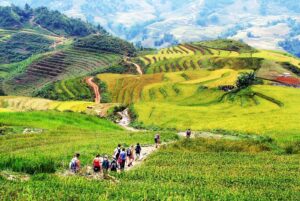
You can also plan a trek from January to March when the wildflowers bloom, adding a romantic touch to the landscape. The cool climate at this time is also perfect for participating in the local festivals.
2. What to pack for a Sapa trekking adventure?
To ensure a safe and enjoyable trek, don’t forget to pack the following essentials:
- Trekking gear: climbing shoes, trekking poles, tents, stakes, sleeping bag liner, backpack, map, and GPS.
- Clothing: waterproof jackets for summer or thermal jackets for winter, long-sleeve pajamas, and sandals.
- Food and drinks: instant meals, drinking water, electrolyte drinks, or glucose water.
- Other necessities: personal identification (ID card, driver’s license), thermal pads, personal hygiene items (toothbrush, toothpaste, face towel), sunscreen, insect repellent, and basic medical supplies (bandages, antiseptics, painkillers, etc.).
3. Best trekking routes in Sapa, Vietnam
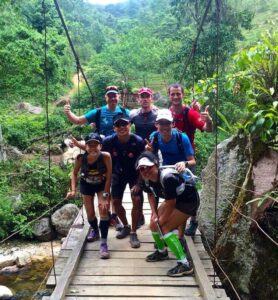
3.1. Sapa – Cat Cat Village – Sin Chai Village
- Duration: 1 day
- Distance: 7 kilometers
- Difficulty: Easy
Starting at Sapa Church, head toward Cat Cat Village, just 2.2 kilometers away. After purchasing an entrance ticket, you can stroll through the village. From Cat Cat, follow Muong Hoa Valley for 3 kilometers to reach Sin Chai, a remote and unspoiled village that captivates visitors with its natural charm.
3.2. Tram Ton Pass – Mount Fansipan
- Duration: 2 days, 1 night
- Distance: 11.2 kilometers
- Difficulty: Hard
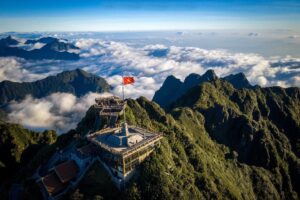
The trek begins at Tram Ton Pass, heading toward Mount Fansipan. Along the way, you’ll be greeted with spectacular mountain views. Upon reaching the 2,800-meter mark, you can set up camp, have dinner, and rest for the night.
The next morning, don’t miss the sunrise before continuing to the summit, which takes about 1.5 hours. At the top, you’ll be rewarded with panoramic views, then begin the descent.
3.3. Sapa – Love Waterfall – Silver Waterfall – Y Linh Ho – Ta Van

- Duration: 2 days, 1 night
- Distance: 20-30 kilometers
- Difficulty: Moderate
Start the trek by motorbike from Tram Ton Pass to Silver Waterfall at around 9:30 am. Afterward, follow the river for 1.1 kilometers to Love Waterfall.
Once you’ve soaked in the sights, continue on to Silver Waterfall by motorbike. Then, make your way along Muong Hoa Valley to Sin Chai Village, where you can stay overnight at a homestay.
On day two, you’ll head back to the town center, visiting Y Linh Ho and Ta Van Villages along the way. Ask the locals to guide you to the suspension bridge and enjoy views of the waterfalls and river.
3.4. Sapa – Ta Phin – Ta Giang Phinh
- Duration: 3 days, 2 nights
- Distance: 43 kilometers
- Difficulty: Hard
Day one takes you from Sapa Church to Ma Tra Village, where you can admire the terraced fields and stop for a meal. Continue onward to Ta Phin.
On day two, trek through hills, valleys, and forests to reach Phin Ho Village, where you’ll stop for lunch before descending through rice fields to Lu Khau Village, home to a salmon farm. Spend the night at a homestay in Suoi Thau Village.
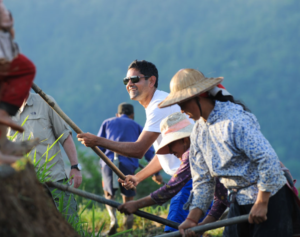
On the final day, explore Suoi Thau and experience the Red Dao people’s culture. Then, visit Gia Thau Village before heading to Kim Ngan Village for lunch. If you’re feeling exhausted, you can take a taxi back to town after visiting Ta Giang Phin Village.
4. Essential tips for trekking in Sapa
Due to the rugged terrain, especially when trekking up and down mountains, ensure you’re in good physical condition. It’s advisable to have a local guide accompany you. If you decide to trek alone, make sure to research the routes thoroughly.
Consider hiring a porter to help with carrying gear. The cost for a porter typically ranges from VND 500,000 to 600,000 per person.
5. Sapa trekking tour costs
The price of a Sapa trekking tour depends on the route, duration, and included services such as accommodation and meals. Here’s an estimate for reference:
- 1-day trek:
- Solo: ~VND 660,000/person
- Group (2-3 people): ~VND 600,000/person
- Group (4-6 people): ~VND 550,000/person
- 2-day trek:
- Solo: ~VND 1,650,000/person
- Group (2-3 people): ~VND 1,430,000/person
- Group (4-6 people): ~VND 1,320,000/person
- 3-day trek: ~VND 2,300,000/person
With its breathtaking mountain landscapes and ethnic minority communities, trekking in Sapa is a must-try for travelers seeking an authentic and adventurous experience. We hope the detailed information provided above will help you enjoy an unforgettable Sapa trekking journey.