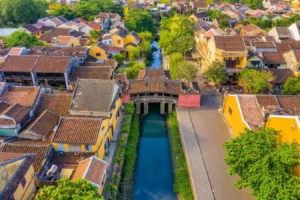
Nestled amidst the enchanting, lantern-lit streets of Hoi An ancient town, a UNESCO World Heritage site, the Hoi An Japanese Bridge stands as a captivating testament to the city’s rich cultural tapestry. This architectural gem, a harmonious blend of Japanese craftsmanship and Vietnamese sensibility, transcends its function as a mere crossing, becoming a poignant symbol of Hoi An’s historical significance and enduring charm. Its iconic image, immortalized on Vietnamese currency, underscores its status as a cultural landmark, drawing visitors from across the globe seeking the unique allure of the Hoi An Japanese Bridge, a must-see for any traveler exploring Vietnam’s cultural treasures.
Contents
- A Bridge Forged in Legend and History: The Hoi An Japanese Bridge’s Story
- Architectural Elegance and Spiritual Sanctuary: Exploring the Hoi An Japanese Bridge
- A Living Chronicle of Hoi An’s Legacy: The Enduring Significance of the Hoi An Japanese Bridge
- A Must-See Destination for Cultural Explorers: Visiting the Hoi An Japanese Bridge
A Bridge Forged in Legend and History: The Hoi An Japanese Bridge’s Story

Architectural Elegance and Spiritual Sanctuary: Exploring the Hoi An Japanese Bridge
The Hoi An Japanese Bridge’s architectural design is a marvel of its time, showcasing a gracefully curved, tiled roof that shelters its wooden structure, reflecting the refined aesthetics of Japanese craftsmanship. At each end, meticulously crafted statues of dogs and monkeys stand guard, symbolizing the years of its construction and representing longevity and protection, adding a layer of artistic and historical detail. The bridge’s interior houses a serene shrine dedicated to Bac De Tran Vo, the deity revered as the protector of the land, a testament to the blend of cultural influences in Hoi An. Despite its compact size, the shrine exudes an aura of tranquility, offering a moment of respite from the bustling streets of Hoi An, inviting visitors to reflect on the spiritual significance of this historical landmark.

A Living Chronicle of Hoi An’s Legacy: The Enduring Significance of the Hoi An Japanese Bridge
The Hoi An Japanese Bridge is more than just an architectural masterpiece; it’s a living chronicle of Hoi An’s vibrant history and its role as a key trading port along the Silk Road of the Sea. It has witnessed centuries of trade, cultural exchange, and social evolution, serving as a vital link between communities and nations, fostering a unique blend of cultures that defines Hoi An. Its weathered timbers and ancient stones whisper tales of bygone eras, reflecting the resilience and enduring spirit of Hoi An, making it a crucial element in understanding the historical and cultural development of Vietnam.

A Must-See Destination for Cultural Explorers: Visiting the Hoi An Japanese Bridge
Each year, millions of tourists are drawn to the Hoi An Japanese Bridge, eager to witness its timeless beauty and immerse themselves in its historical ambiance, making it one of the top attractions in Vietnam. For visitors to Hoi An, a stroll across this iconic bridge is an essential experience, offering a glimpse into the soul of this UNESCO World Heritage Site and providing a tangible connection to the city’s past. The bridge’s enduring appeal lies not only in its architectural splendor but also in its profound cultural significance, making the Hoi An Japanese Bridge an inseparable part of Hoi An’s identity and a symbol of the city’s enduring charm and historical importance.