
Contents
Long Bien Bridge: A Witness to History
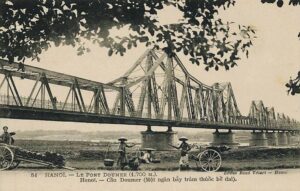
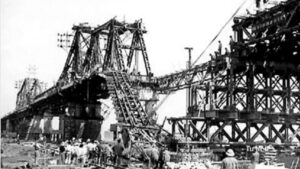
Standing sentinel across the mighty Red River, the Long Bien Bridge in Hanoi is more than just a conduit connecting bustling districts. It is a living, breathing monument, a steel-laced testament to over a century of Vietnamese history. Forged in the crucible of colonial ambition between 1899 and 1902, this iconic structure has borne witness to the ebb and flow of Vietnam’s tumultuous past, embedding itself deeply within the cultural fabric and the very soul of Hanoi’s people.
From Colonial Artery to Symbol of Resistance
In an era when Vietnam groaned under the weight of French colonial rule, the Long Bien Bridge emerged as a feat of engineering, a symbol of progress imposed upon a subjugated land. Conceived by Gustave Eiffel – the visionary behind the famed Parisian tower – its intricate network of cantilevered beams and robust piers was initially christened the Pont Paul-Doumer. Yet, its purpose transcended mere infrastructure; it became a vital artery for the colonial administration, facilitating the transport of goods and resources, a tangible manifestation of their dominion.
However, the bridge’s destiny was far grander than its initial colonial function. As the flames of Vietnamese nationalism ignited and the struggle for independence intensified, the Long Bien Bridge inadvertently found itself at the heart of the resistance. During the arduous years of fighting against French and later American forces, the bridge became a strategic target, a vital link that the Vietnamese people fought fiercely to protect and, at times, disrupt. The echoes of the Điện Biên Phủ campaign, a resounding victory against the French, reverberated through the steel girders of the bridge, a silent promise of a nation yearning for freedom. Similarly, during the relentless bombing campaigns of the Vietnam War, the Long Bien Bridge endured unimaginable devastation, its resilient frame bearing the scars of conflict. Each bomb crater, each repaired section, whispered tales of unwavering determination and the indomitable spirit of the Vietnamese people.
Enduring Strength and a Source of Pride
The bridge’s survival through such brutal trials transformed it from a mere structure into a potent symbol of resilience. It stood defiant amidst the chaos, a steadfast presence that mirrored the unwavering resolve of the Vietnamese people in their pursuit of self-determination. The “nation’s glorious days,” the reunification and the subsequent journey towards progress, are inextricably linked with the enduring image of the Long Bien Bridge, a silent observer of a nation reborn.
Today, the Long Bien Bridge continues its vital role, not just as a crucial transportation link easing the flow of daily life in Hanoi, but also as a cherished landmark. It has evolved into a popular pilgrimage site for both tourists and locals alike. Strolling along its weathered pathways, one can feel the weight of history beneath their feet, the echoes of countless journeys undertaken across its span. The panoramic vistas it offers of the sprawling Red River, its muddy waters carrying tales of ancient civilizations and agricultural heartlands, are simply breathtaking. As the sun dips below the horizon, casting a warm golden glow upon the bridge’s aged steel, it transforms into a photographer’s dream, a timeless subject that encapsulates the beauty and history of Hanoi.

A Testament to Engineering and Vietnamese Spirit
The bridge’s unique architectural design, a testament to the ingenuity of late 19th and early 20th-century engineering, further enhances its allure. Its distinctive cantilevered structure, a marvel for its time, speaks volumes about the creativity and skill of its builders. This enduring design, coupled with the bridge’s profound historical significance, has cemented its place as an undeniable symbol of Hanoi’s strength and resilience. It embodies not only the technical prowess of its engineers but, more importantly, the enduring spirit of the Vietnamese people who have weathered countless storms while keeping this iconic structure as a steadfast part of their identity.

An Integral Part of Hanoi’s Cultural Landscape
More than just a crossing point, the Long Bien Bridge has become an integral part of Hanoi’s cultural landscape. It’s a place where memories are made, where couples stroll hand-in-hand, where families gather to enjoy the cool breeze and the river views, and where artists find inspiration in its timeless beauty. It’s a tangible link to the past, a reminder of the sacrifices made and the triumphs achieved. The Long Bien Bridge stands tall, not just as a physical structure, but as a powerful emblem of Hanoi’s enduring spirit, a witness to history that continues to inspire pride and awe in the hearts of the Vietnamese people. Its story is etched in its steel, carried by the winds that sweep across the Red River, a story that will continue to be told for generations to come.
